Description
Working Principle
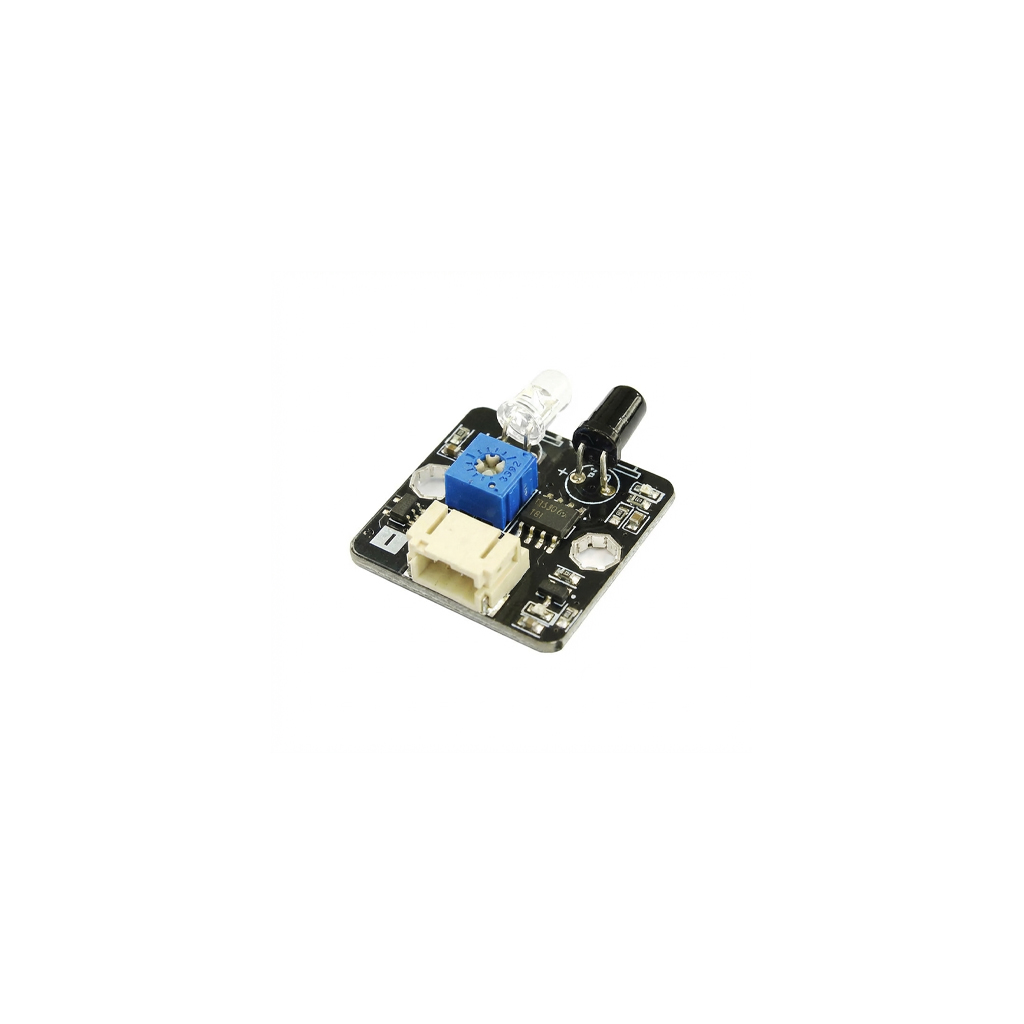
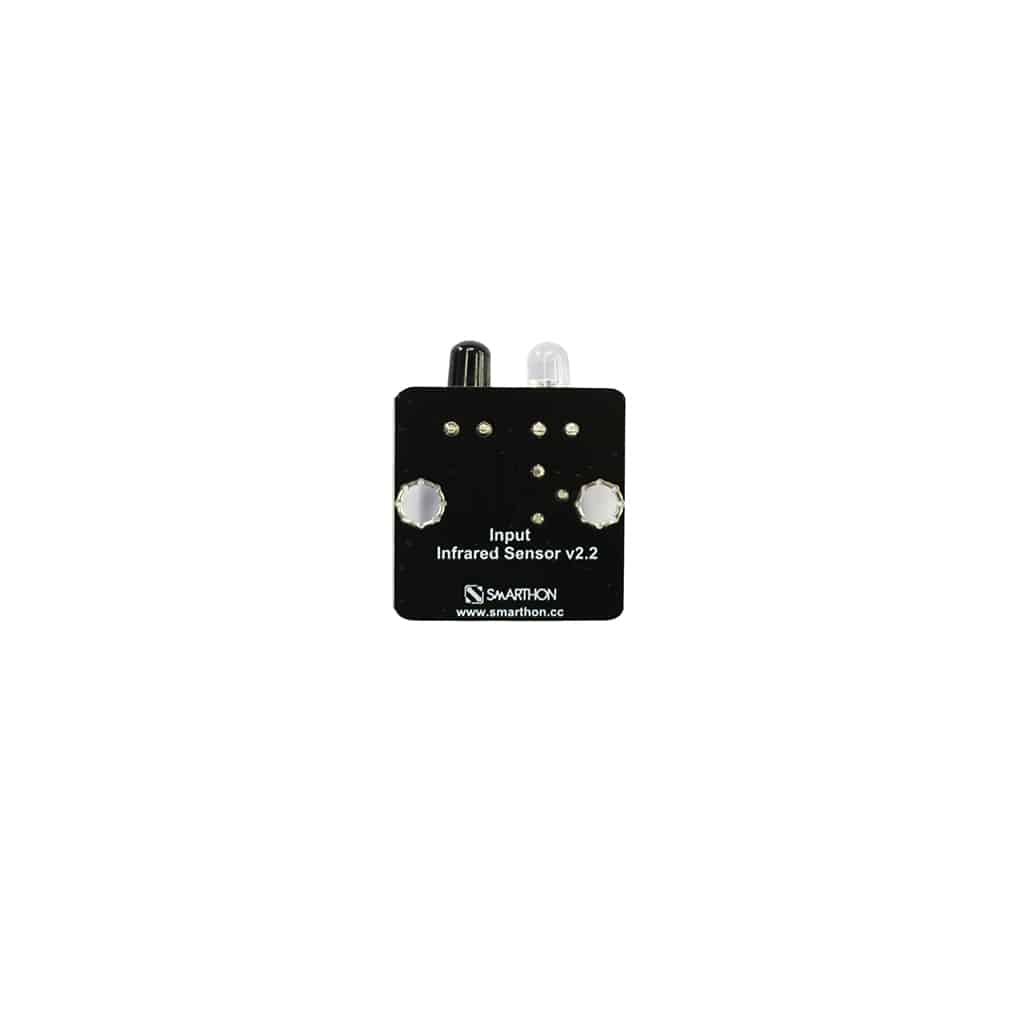
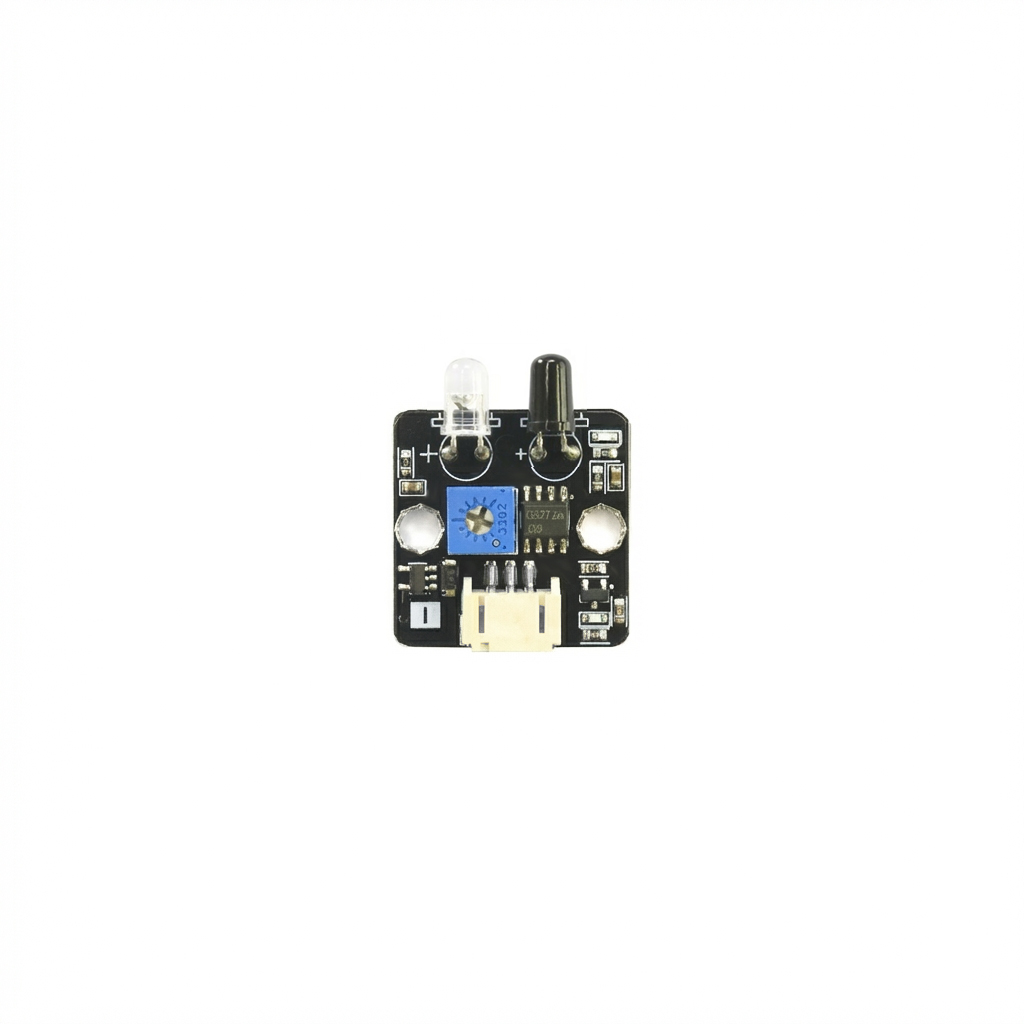
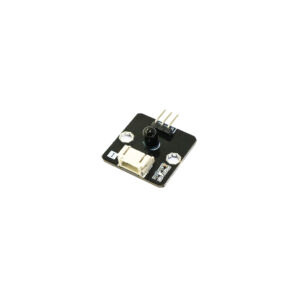
An infrared sensor consists of an infrared LED and an infrared photodiode. The infrared LED continuously transmits infrared light that is invisible to the human eye. The photodiode is highly sensitive to infrared light and changes its resistance and output voltage proportionally to the intensity of the received light.
When the transmitted infrared light encounters an object, part of it is reflected back to the receiver. The intensity of the reflected light detected by the receiver depends on the object’s distance and surface properties. By setting a threshold, the sensor can determine whether an object is approaching.
The surface properties of an object, such as color, texture, size, and shape, affect the distance at which the receiver can detect the reflected light. For example, lighter colors can be detected from a greater distance compared to darker colors, and smooth surfaces reflect light more effectively than rough surfaces.
Specifications
Specifications
Returned value (Digital): 0 when an object is detected; 1 when no object is detected.
- Minimum Trigger Distance:
- Cardboard: 4.5 cm
- Brown Plastic: 4 cm
- White Paper: 5 cm
- Maximum Trigger Distance:
- Cardboard: 13 cm
- Brown Plastic: 10 cm
- White Paper: 53 cm
Transmitter (Maximum Parameters at 25°C) Power Consumption: 100mW
Pulse Peak Current: 60mA
Forward DC Current: 30mA
Reverse Voltage: 6V
Operating Temperature: −55°C to +100°C
Storage Temperature: −55°C to +100°C
Receiver (Maximum Parameters at 25°C) Power Consumption: 75mW
Reverse Voltage: 30V
Operating Temperature: −25°C to +85°C
Storage Temperature: −40°C to +85°C
Only logged in customers who have purchased this product may leave a review.

Reviews
There are no reviews yet.